
Key Takeaways
- Radiologist attrition rates more than doubled between 2014 and 2022, and imaging demand — especially CT and MRI — is projected to keep pace with or outpace workforce growth through 2055 without significant structural intervention.
- A 2020 CMS regulatory shift quietly redefined “direct supervision” to include real-time audiovisual presence, opening the door for virtual contrast supervision as a legitimate, reimbursable solution — a policy made permanent effective January 1, 2026.
- Virtual contrast supervision can help short-staffed practices protect imaging revenue, reduce reliance on expensive traveling radiologists, and ease the burnout that drives attrition.
- Platform-based virtual contrast supervision offers a turnkey path to implementing virtual contrast supervision — without requiring practices to overhaul existing workflows.
- Keep reading to see how one rural imaging center used virtual supervision to stay open when in-person staffing became impossible.
The U.S. radiology workforce is caught in a slow-moving crisis that most practice managers already feel in their daily operations — longer read queues, harder-to-fill schedules, and mounting pressure on the radiologists who remain. Understanding why the shortage is worsening and what regulatory tools are now available to manage it is the first step toward building a sustainable staffing model.
Radiologist Attrition Has More Than Doubled — And Imaging Demand Keeps Climbing
The numbers are hard to ignore. According to a 2025 study published through the Harvey L. Neiman Health Policy Institute (Neiman HPI) in collaboration with Jay R. Parikh, MD, FACR, radiologist attrition rates in the U.S. more than doubled from 1.1% in 2014 to 2.5% in 2022. Attrition was already climbing well before COVID-19 hit — rising from 1.1% to 2.0% between 2014 and 2019 — which means the pandemic accelerated an existing trend rather than created a new one.
At the same time, imaging demand is moving in the opposite direction. Advanced imaging volumes are projected to grow significantly over the next decade, with PET scans leading at +28%, CT at +18%, and MRI at +11%. The AAMC has projected a shortfall of up to 35,600 radiologists and other specialists by 2034 — a gap driven by an aging population and a steady increase in the number of scans ordered each year. Without structural changes, the radiology workforce shortage is expected to remain essentially unchanged — neither resolving nor dramatically worsening — through 2055. Workforce growth is projected to match imaging growth only under favorable conditions, such as sustained increases in residency positions.
For practice managers, this issue isn’t just a theoretical policy matter. It directly impacts daily operations, resulting in more difficult call schedules, increased workloads for radiologists, and burnout that worsens the staff shortages. More imaging facilities are seeing that virtual contrast supervision must be available nationwide.
Why the Shortage Isn’t Going Away on Its Own
Attrition Is Accelerating, Not Stabilizing
The doubling of attrition rates since 2014 is not a blip — it reflects a fundamental shift in how radiology is practiced. Economic pressures, declining reimbursements, growing administrative burdens, and the sheer volume of imaging work have made it increasingly difficult for radiologists to sustain long careers. For practice managers, this means the workforce pipeline is draining faster than residency programs can refill it. Increasing residency positions is one lever being pulled, but it takes years of training before any new resident becomes a practicing radiologist — making it a long-term fix with no short-term relief.
Subspecialists — the Most Needed — Are Leaving Fastest
One of the more alarming findings from Neiman HPI research is that subspecialist radiologists are 37% more likely to leave the workforce than generalists. These are the radiologists that hospitals and health systems most depend on for complex, high-acuity imaging. The data on pediatric radiologists illustrates this clearly: the absolute number of subspecialists focused on pediatric patients declined from 2,190 in 2016 to 2,032 in 2023 — a drop from 6.4% to 4.6% of the total radiologist pool. When the radiologists performing the most specialized work leave at the highest rates, the downstream clinical impact compounds quickly.
Consolidation Is Pushing More Radiologists Into Subspecialty Roles
Practice consolidation is reshaping the landscape in ways that directly affect the attrition problem. A 2024 Neiman HPI study found that the number of medical practices with affiliated radiologists decreased by 14.7% from 2014 to 2023, even as the number of radiologists grew by 17.3%. The average practice size nearly doubled — from 9.7 to 17.9 radiologists per practice. Radiology-only practices, historically the home of generalists, shrank by almost one-third. As radiologists are absorbed into larger multispecialty entities, they are more likely to practice as subspecialists — and, as noted above, subspecialists are more likely to leave. It is a reinforcing cycle with no obvious self-correction mechanism.
What Burnout Is Costing Radiology Practices
Burnout Remains a Persistent Workforce Retention Problem
Burnout is more than just a wellness concern — it significantly impacts workforce retention and has measurable operational effects. Radiology often reports some of the highest burnout rates among medical specialties, with many radiologists citing exhaustion at work as a key issue. The Neiman HPI highlights that burnout and attrition are closely connected, driven by structural pressures like high imaging volumes, administrative tasks, and declining reimbursements, which are unlikely to improve on their own. Female radiologists experience higher attrition rates than males, reflecting broader workforce equity issues that worsen retention challenges. A workforce showing signs of depletion cannot operate at its full potential.
Workforce Instability Is Translating Directly Into Patient Harm
The effects downstream are becoming more apparent. Radiologist shortages lead to longer imaging turnaround times, increased workload per radiologist, and delayed diagnoses. For imaging center managers, these delays go beyond clinical issues — they pose reputational risks, legal exposures, and can diminish patient satisfaction, threatening long-term referral relationships. The workforce shortage and patient care challenges are interconnected problems.
How CMS Quietly Opened the Door to Virtual Supervision
How Contrast Coverage Changed in 2020 and in 2026
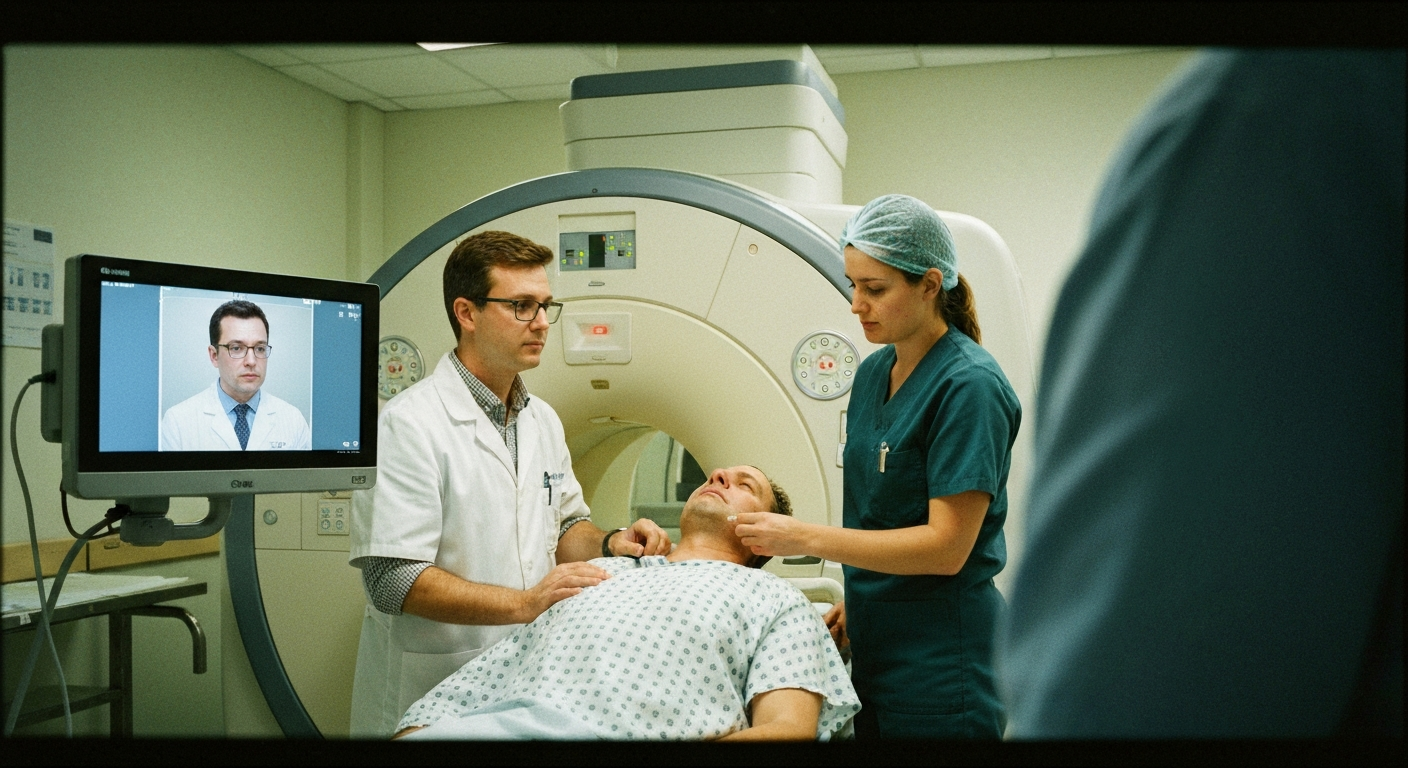
In April 2020, at the height of the COVID-19 pandemic, the Centers for Medicare & Medicaid Services (CMS) made a regulatory change that did not generate many headlines — but has significant implications for short-staffed radiology practices. CMS updated its definition of direct supervision to include virtual presence via real-time, two-way audiovisual technology. In practical terms, this means a radiologist no longer needs to be physically present in the same building to provide the required level of supervision for contrast-enhanced imaging. This policy was made permanent, effective January 1, 2026.
This matters enormously for contrast administration. Contrast-enhanced CT, MRI, and other imaging studies have historically required direct physician supervision during injection — a requirement that tied contrast availability directly to in-person radiologist scheduling. That staffing dependency created a ceiling on imaging access at sites without consistent on-site coverage. The 2020 CMS shift effectively removed that ceiling for practices willing to build a compliant virtual supervision model.
What “Immediate Availability” Means Under the Virtual Standard
Under the virtual supervision standard, the supervising physician must be immediately available via live, two-way audio-video communication. Regulatory guidance emphasizes that “immediate” reflects a genuine patient safety standard — not an administrative formality — and requires the supervising radiologist to be actively reachable at the moment contrast is administered. This means the virtual supervision setup must be technically reliable and protocol-driven. It is a high bar, but a manageable one — and, critically, it allows coverage to extend across sites that could never afford or maintain a full-time on-site radiologist.
Virtual Contrast Supervision: A Practical Fix for Short-Staffed Practices
Understanding the regulatory framework is helpful, but knowing how it translates into operational relief truly changes things for practice managers. Virtual contrast supervision tackles several key staffing challenges at once—without the need for additional hires or major physical infrastructure changes.
1. Stretch Limited Radiologist Capacity Without Adding Headcount
A radiologist supervising contrast administration virtually can oversee multiple sites within the same time window that would otherwise require separate on-site personnel at each location. For group practices managing imaging at two or more facilities, this multiplier effect directly increases the number of contrast studies each supervising radiologist can complete — without hiring additional staff. In a tight labor market, capacity expansion that does not depend on headcount growth is a meaningful operational advantage.
2. Protect Contrast Imaging Revenue at Rural and Critical Access Sites
For critical access hospitals and rural imaging centers, the staffing challenge is even more acute. Contrast-enhanced studies account for a significant share of imaging revenue, and without on-site physician coverage, those studies — and that revenue — disappear. Virtual contrast supervision enables these facilities to retain contrast imaging locally rather than redirecting patients to distant facilities. That revenue stays in the community, and patients avoid burdensome travel for studies that could be completed close to home.
3. Reduce the Scheduling Dependency on Traveling Radiologists
Traveling radiologists fill a real need, but they also bring significant cost and scheduling volatility. Last-minute cancellations can ground an entire day of contrast imaging at a rural site. Virtual supervision creates a more predictable coverage model — one that does not hinge on a single person boarding a flight or dealing with weather delays. For administrators managing tight margins, that scheduling reliability has tangible financial value beyond direct cost savings on travel and locum fees.
4. Ease Workload Pressure Contributing to Burnout
Burnout in radiology is, in large part, a workload problem. Virtual supervision does not eliminate that workload — but it does distribute coverage more efficiently across a practice’s radiologist pool. Rather than assigning one radiologist to spend an entire day physically present at a low-volume site for contrast supervision, that same radiologist can provide virtual oversight while continuing to contribute to read volume remotely. The result is a more sustainable daily workflow and, over time, a modest but meaningful reduction in the scheduling pressure that contributes to exhaustion.
A Turnkey Path to Virtual Supervision
Knowing that virtual contrast supervision is possible and building a compliant, operationally reliable program around it are distinct challenges. The regulatory framework exists, and the clinical rationale is well established. What many practices lack is a straightforward implementation path that does not require months of internal development and compliance reviews.
Virtual contrast supervision platforms designed for radiology practices and hospital administrators who need a ready-to-deploy virtual supervision solution — one that meets CMS’s “immediate availability” standard, integrates without disrupting existing workflows, and gives short-staffed practices the coverage infrastructure to maintain contrast imaging access across their sites. Rather than patching a staffing problem with expensive locum arrangements, virtual supervision through a purpose-built platform turns a regulatory allowance into a durable operational model.
The radiologist shortage is not resolving on its own — but the tools to manage it more effectively are available now, and practices that move early will be better positioned for the long haul ahead.
ContrastConnect
Las vegas
Las Vegas
NV
89109
United States


